Learning Korean while working full-time is a marathon, not a sprint.
In my previous article, I shared how busy adults can carve out study time amidst a hectic schedule.
How to Learn Korean While Working a Full-Time Job (Even If You’re Busy)
But the next big question is: “Which textbook should I actually use?“
With so many options out there, it’s easy to feel overwhelmed. That’s why I’ve curated a list of the best Korean grammar books specifically for self-study learners.
Whether you’re a K-pop fan dreaming of understanding your bias without subtitles, a busy professional, or a stay-at-home parent, these picks will help you build a solid foundation without the need for an expensive language school.
Quick Guide: Which Korean Grammar Book Matches Your Goal?

Which Korean textbooks are actually the best for self-study?
And how far should you go if you’re learning on your own?
Let’s be honest: becoming fully fluent through self-study alone is a massive undertaking.
However, it is completely possible to reach a level where you can understand what your bias is saying and finally express your feelings to them.
(If I could do it, you can too!)
Before diving in, take a moment to define your target.
write that goal down. Ideally, put it somewhere you’ll see it every day—like your planner or a sticky note on your desk—to keep your motivation high.
Once your goal is clear, you’re already halfway there! Let’s get to work! 💪✨
How I Selected These Korean Grammar Books

When people ask me, “Which Korean grammar book do you recommend?”
My honest answer is: most beginner textbooks are actually fine.
Some learners prefer books with plenty of diagrams and illustrations for visual clarity.
Others enjoy diving deep into the history and background of Hangul.
However, there is one rule that matters more than anything else: For your very first book, stick to just one.
If you get too ambitious and juggle multiple grammar books, you won’t actually learn faster.
In fact, you’re more likely to feel overwhelmed and give up altogether.
You don’t even need a separate vocabulary book yet!
Instead, pick one solid grammar book and work through it steadily.
When you encounter new words, simply jot them down in a notebook.
This simple approach is all you need to break through the beginner level with confidence.
Still thinking, “I just can’t decide”? Don’t worry—I’ve done the heavy lifting for you. Let’s look at my top picks in the next section! 😊
Best Korean Grammar Books for Beginners & Casual Learners

To kick things off, I’ve handpicked the best resources for complete beginners.
My selection is based on a mix of personal experience and proven results. I’ve focused on titles that aren’t just my personal favorites, but are also top-rated on Amazon and highly recommended by the global Korean learner community.
Whether you want to study systematically or just pick up enough to enjoy K-dramas, these books are the gold standard.
If You’ve Never Studied Hangul Before, Start Here
What do you think is the biggest hurdle for Korean beginners?
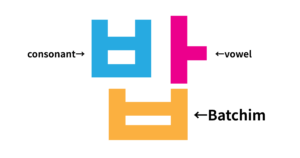
From my experience, I can confidently say: mastering Hangul is the hardest part.
Those blocky, symbol-like characters might look simple at first, but they can be surprisingly tricky to memorize. One day you think, “I’ve got it!”—and the next, it’s like your mind has gone blank.
If that sounds familiar, I strongly recommend starting with a drill-style workbook.
Just like children learn to write by tracing letters, you need that hands-on repetition to make the characters stick.
My top recommendation is this one: [Korean Alphabet with Writing Workbook: Introductory Guide to Hangeul Series, Vol. 1]
Once you finish this workbook, you’ll experience that magical moment of being able to read your favorite K-pop group’s name or your bias’s SNS posts in their original language. ✨
If you’re looking to start while keeping costs low, I’ve got you covered!
- I explain the basics of the Korean alphabet over on my Substack.
- For those who want extra practice, I also sell even simpler, fan-friendly Hangul worksheets on my Etsy shop.
Feel free to check them out and start your journey today! 😊
Let’s Speak Korean For Learners Who Want Practical Conversation Over Heavy Grammar
Once you’ve got the basics of Hangul down, it’s time to shift to practical application.
At this stage, you usually have two paths: diving deep into systematic grammar or focusing on useful, everyday phrases.
Let’s be honest—some of you might actually dread the word “grammar.”
Too many complicated rules? No thanks! You just want phrases you can use right away.
If that’s you, I highly recommend this book: [Let’s Speak Korean: Learn Over 1,400+ Expressions Quickly and Easily]
To get the most out of this resource, I suggest this 4-step approach:
- Train your ears: Play the audio first without looking at the text.
- Shadowing: Listen again and repeat out loud, mimicking the native pronunciation as closely as possible.
- Connect sound to text: Read the Hangul while listening and speaking to reinforce the connection.
- Handwriting: Write the phrases down in a dedicated notebook to lock them into your memory.
With over 1,400 ready-to-use phrases, you’ll start “speaking” Korean much faster than those stuck on grammar rules alone.
While this book won’t make you a grammar expert overnight, it builds a massive foundation of vocabulary that makes learning formal grammar much easier later on.
Learn Korean for Adult Beginners: 7 Books in 1 – Speak Korean in 30 Days! The All-in-One Choice for Those Who Value Structure
Do you feel like grammar is an uphill battle—that no matter how much you study, you still can’t speak?
Here’s the truth: Grammar is the skeleton of the language.
Once you understand the structure, everything else falls into place.
Reading becomes smoother, phrases stick in your memory longer, and suddenly, you start catching more words while listening.
If you want to build a rock-solid foundation from day one, this is the book I recommend: [Learn Korean for Adult Beginners: 7 Books in 1]
Why This Book is My Top Recommendation: This isn’t just another textbook; it’s a comprehensive roadmap designed for busy adults. Here’s why it stands out:
- Balanced Mastery: It seamlessly blends Hangul, essential grammar, and high-frequency vocabulary.
- Interactive Learning: Includes audio and exercises to develop reading, listening, writing, and speaking skills simultaneously.
- Realistic Timeline: The curriculum is manageable. You can complete it in just 30 days if you’re focused, or take a more relaxed 3-month pace.
If you simply follow the chapters in order, your fluency will grow naturally. If I could only recommend one book to a self-study learner starting from scratch, this would be it.
Talk To Me In Korean (TTMIK) Level 1 : Best for Busy Learners Who Want a Low-Stress Approach
If you’re reading above, chances are you’re juggling a lot.
You might be thinking: “I really want to learn Korean, but where am I supposed to find the time?”
Most adult learners are squeezing study sessions between full-time shifts and life’s endless to-do lists.
And let’s be real—sometimes you’re just too busy catching up on your bias’s latest content to open a textbook (no judgment here, we’ve all been there! 😄).
For those who need a guilt-free, manageable way to start, this is the perfect pick: [Talk To Me In Korean Level 1: Includes Audio Download]
Why it fits a busy lifestyle: While I’ve mentioned books focused on either pure conversation or strict grammar, TTMIK sits perfectly in the middle. It offers the best of both worlds.
- Bite-sized Lessons: Each chapter is short and punchy, designed to be finished in one sitting without feeling overwhelmed.
- Approachably Aesthetic: The layout is airy, with plenty of white space and illustrations. It doesn’t feel like a heavy textbook, which is a huge win after a long day at work.
- A Clear Path Forward: Since it’s a structured series, you can start at Level 1 and climb the ladder all the way to intermediate at your own pace.
If you want to start your Korean journey without the pressure of a “classroom” feel, this is your best starting point.
Ready to Challenge TOPIK I? Set a Goal and Supercharge Your Progress
Once you’ve built your foundation, why not test your skills with TOPIK I?
In my experience, studying aimlessly is far less effective than having a clear target.
There’s something magical about a test date—it suddenly turns on your “serious mode.”
Phrases you struggled to memorize before somehow start to stick (it’s funny how the brain works when there’s a deadline! 😄).
TOPIK is divided into two levels: TOPIK I (Beginner) and TOPIK II (Intermediate/Advanced).
If you can read basic words and simple sentences, TOPIK I is well within your reach.
For exam prep, my top recommendation is: [Vitamin Korean 1]
Even if you don’t plan on taking the official exam right away, working through TOPIK-style questions is incredibly valuable.
It gives you a clear benchmark of what a beginner should know and provides a structured direction for your studies.
Should You Take an Online Korean Course—or Skip It?

If you’re studying on your own, you’ll eventually hit this crossroads: “Is an online course actually worth the investment?”
I’ve been there myself.
When I first started, online courses weren’t nearly as accessible as they are today.
Back then, your only real option was attending a local language school, which meant high costs and rigid schedules that rarely fit a full-time worker’s life.
Fast forward to 2026, and the game has changed.
With just a smartphone, you can access world-class Korean lessons from anywhere.
For those who can’t study abroad or attend a university, these platforms are perhaps the most powerful tools for achieving true fluency.
However, I only recommend online courses if you meet these two criteria:
- You can already read Hangul and know a handful of basic phrases.
- You’ve tried studying alone but struggled to stay motivated or consistent.
If you’re an absolute beginner who can’t read a single character yet, an online course can be an expensive and inefficient way to start.
It’s much more cost-effective to build your foundation using the books I mentioned above first.
The “Sweet Spot” for Online Courses: > Once you have the basics down and feel that itch to start speaking, that is the perfect moment to transition to an online course.
If you’re looking for the best way to transition from textbooks to real conversations, I highly recommend italki.
It’s an online platform where you can find hundreds of professional Korean teachers and community tutors for 1-on-1 lessons. Here’s why it’s a game-changer for busy learners:
- Pay-as-you-go: Unlike expensive language schools, there are no hefty upfront fees or monthly subscriptions. You only pay for the lessons you book.
- Total Flexibility: Working full-time? No problem. You can find teachers available 24/7, so you can fit a 30-minute lesson into your lunch break or late at night.
- Tailored to Your Fandom: You can literally choose a teacher who loves the same K-pop group as you! It’s much easier to practice speaking when you’re talking about your “bias.”
Note: If you use the link above to make your first purchase, I may earn a small commission at no extra cost to you. This helps me keep HelloBias running—thank you for your support!
Strategic Study Tips: How to Use Grammar Books Without Burning Out

Balancing a full-time career and worried you won’t be able to stay consistent?
I completely understand.
I developed these strategies while juggling a full-time job and raising my children.
These aren’t just theories; they are realistic habits that worked for me when life got chaotic.
- Give yourself permission to take breaks: Don’t beat yourself up if you miss a day. It’s perfectly fine to rest—the only thing that matters is that you don’t quit entirely.
- Master the “Micro-Study” session: Make use of tiny pockets of time. Whether it’s five minutes on a commute or solving two questions on an app while waiting for coffee—it all counts! If you studied at all, you’ve won the day.
- Consistency over Intensity: Don’t feel pressured to sit down for an hour. Ten minutes a day every day is far more powerful than a three-hour marathon once a month.
I explain this approach in more detail in a previous article, so feel free to check that out as well.
How to Learn Korean While Working a Full-Time Job (Even If You’re Busy)
For working adults, the secret is simple: Keep the flame alive, no matter how small.
Even 5 or 10 minutes a day is enough to see real progress. You’ve got this! 💪✨
Final Thoughts: Choose One Book and Keep Moving Forward
There is no such thing as a “perfect” Korean grammar book that works for everyone.
The only book that truly matters is the one that fits your current level, your lifestyle, and the one you actually stick with.
You don’t need to study for hours every day.
You don’t need a mountain of textbooks on your desk.
And you definitely don’t need to be perfect.
Even 5–10 minutes of consistent effort is more than enough to see real, tangible progress.
Whether you start with Hangul drills, practical phrases, or a structured TOPIK prep book, the secret is the same: keep going at your own pace.
Korean learning is a marathon, not a sprint.
Take it one step at a time, and one day soon, you’ll realize you’re understanding your bias’s words without even glancing at the subtitles. 😊✨
Believe in yourself—your journey starts today!
💬 If you found this post helpful, consider supporting me with a coffee!
Your support keeps Hello Bias going ☕💛
👉 Buy Me a Coffee